Column Chart
Column Chart in Power BI
A column chart uses vertical bars to show a value for each category, with the bar’s height standing in for the number. It is one of the simplest and most widely used visuals in Power BI, and often the first chart people reach for since Power BI will build one automatically the moment it detects a numeric field.
A column chart works best for two kinds of stories. Tracking a value over time, such as monthly sales, since the eye naturally reads a left to right sequence, and ranking a moderate number of categories against each other, since it is easy to spot which bar is tallest at a glance.
Step by Step Process of Creating Column Chart
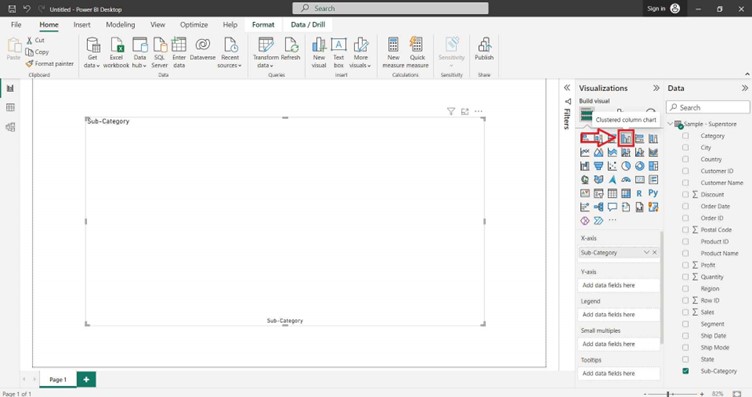
Step 1: Add a Column Chart to the Report
In the Visualizations pane, click the Column Chart icon. This adds an empty column chart visual to the report canvas.
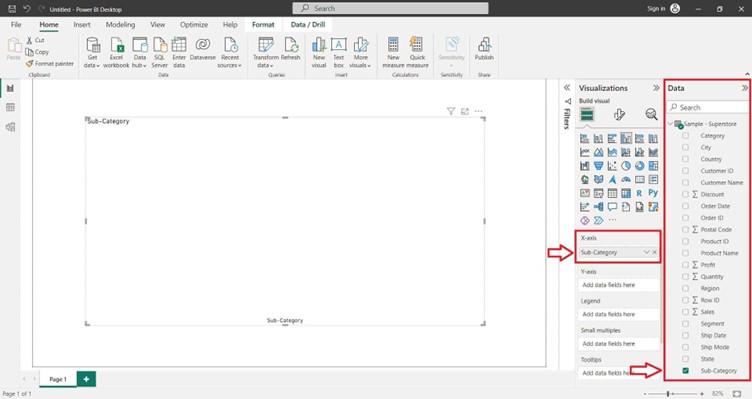
Step 2: Add a Field to the X Axis
In the Visualizations pane, drag the field you want as your category, such as month, product, or region, into the X axis section.
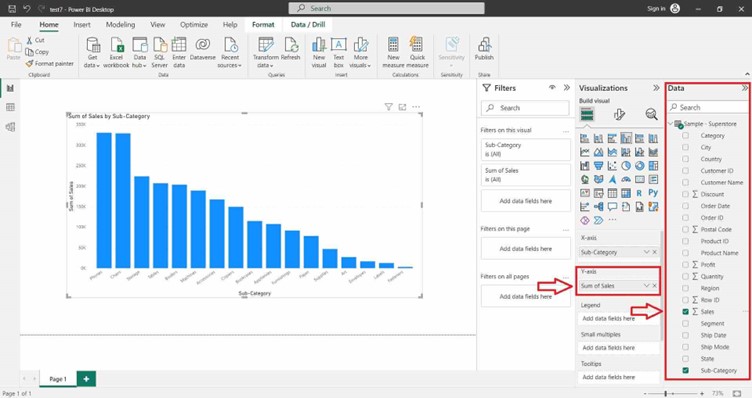
Step 3: Add a Field to the Y Axis
Drag the number you want to measure, such as sales or units sold, into the Y axis section. This decides the height of each bar.
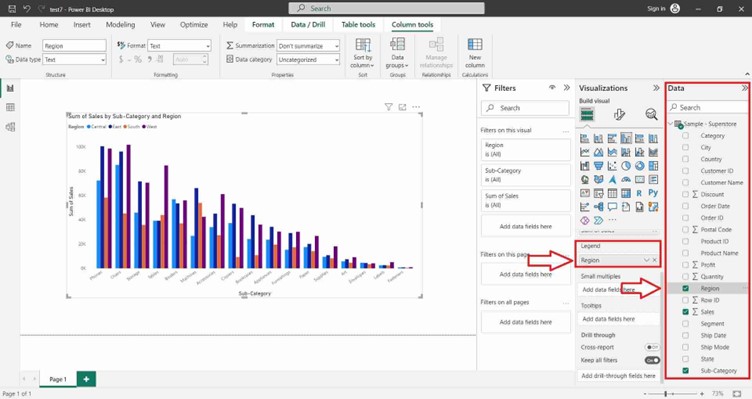
Step 4: Add a Field to Legend
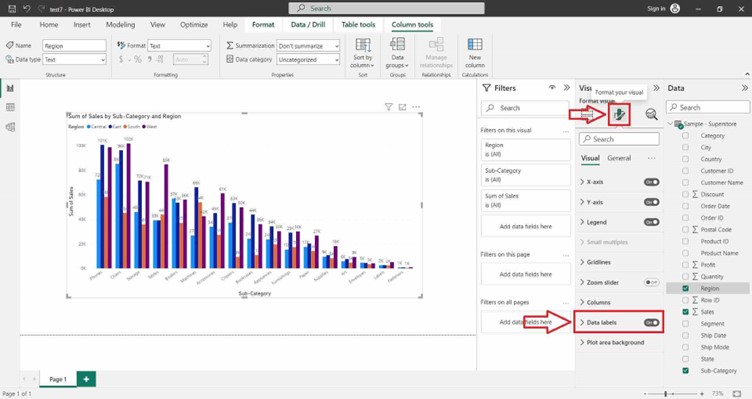
Drag a field into the Legend section if you want to compare a second dimension inside each category, such as this year against last year, or one product line against another. This is the step that turns a plain column chart into what Power BI calls a clustered column chart, where each category shows several bars side by side, one per legend value, instead of just one.
Step 5: Format the Chart and Turn On Data Labels
Click the Format icon to open the Format pane. Look for Data Labels and switch it on. This prints the value directly above or inside each bar.
Column Chart Compared to Bar Chart
A column chart and a bar chart plot the same kind of data, the only real difference is direction. A column chart stands its bars up vertically, which suits a left to right story such as change over time. A bar chart lays them out horizontally, which suits situations with many categories or long category names, since there is more room to fit readable text along the axis without crowding or angling the labels. If your category names are getting cut off or turned sideways to fit, that is usually the sign to switch to a bar chart instead of fighting the column chart’s layout.
Keeping a Clustered Column Chart Readable
Adding a legend gives you more information in the same chart, but it comes with a limit. A cluster works best with 2 to 5 legend items per category. Past that, the bars get thin, the colors get hard to tell apart, and the chart turns into what is sometimes called a rainbow chart, technically accurate but genuinely hard to read.
- Keep the legend to a small, meaningful set, such as this year versus last year, or top 3 to 4 product lines, rather than every possible value in the field.
- Do not manually change where the Y axis starts. Power BI starts it at zero by default, which is correct, since starting anywhere else exaggerates the visual difference between bars and misrepresents the data.
- If the X axis has more categories than the chart can label clearly, sort by value and filter to the top or bottom performers rather than showing everything at once.
When to Use a Column Chart
- You want to show how a value changes over a sequence, such as monthly or quarterly figures.
- You want to rank a moderate number of categories against each other and make the leader obvious at a glance.
- Your category names are short enough to read comfortably along the bottom axis without crowding.
That covers building, formatting, and choosing a column chart in Power BI. To keep building out your report with other chart types, explore Prwatech’s Power BI training program, which includes placement assistance.
