Stacked Column Chart
Stacked Column Chart in Power BI
A stacked column chart shows a set of vertical bars, where each bar represents a category and its height represents the total value for that category. Inside each bar, the value is broken into segments, one per sub category, stacked on top of each other. It is a good way to show a part to whole relationship, the total for each category and how that total breaks down, in a single chart.
Getting real value from this chart depends on a few basics: the colors need to stay consistent across categories, the labels and title need to say plainly what is being measured, and the stacking order should reflect how the sub categories actually relate to each other, not just whatever order the data happened to load in.
What This Chart is Good At, and Where It Struggles
A stacked column chart is strong at showing the total for each category and how that total is made up. What it is not good at is letting you compare a sub category across different bars. Only the bottom segment of each bar shares the same starting point on the axis, so if you want to compare, for example, the second or third segment from the bottom between two different bars, it is genuinely hard to judge by eye. If that comparison matters more than the totals, a clustered column chart usually serves you better, more on that below.
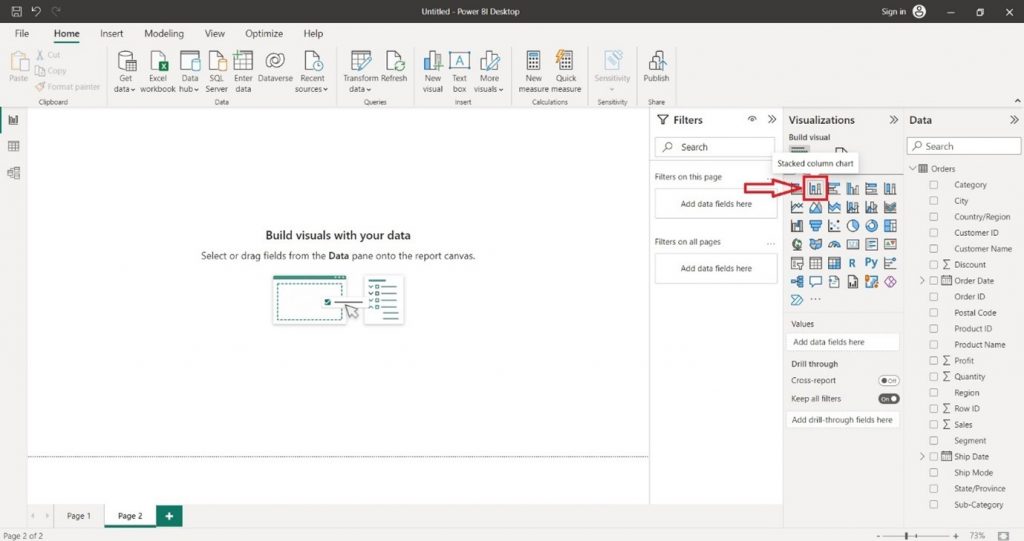
Step 1: Add a Stacked Column Chart to the Report
In the Visualizations pane, click the Stacked Column Chart icon. This adds an empty chart visual to the report canvas.
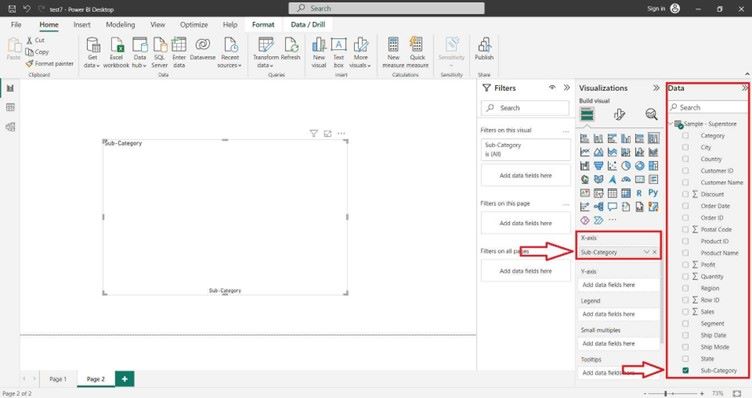
Step 2: Add a Field to the X Axis
In the Visualizations pane, drag the field you want as your category, such as month, region, or product, into the X axis section.
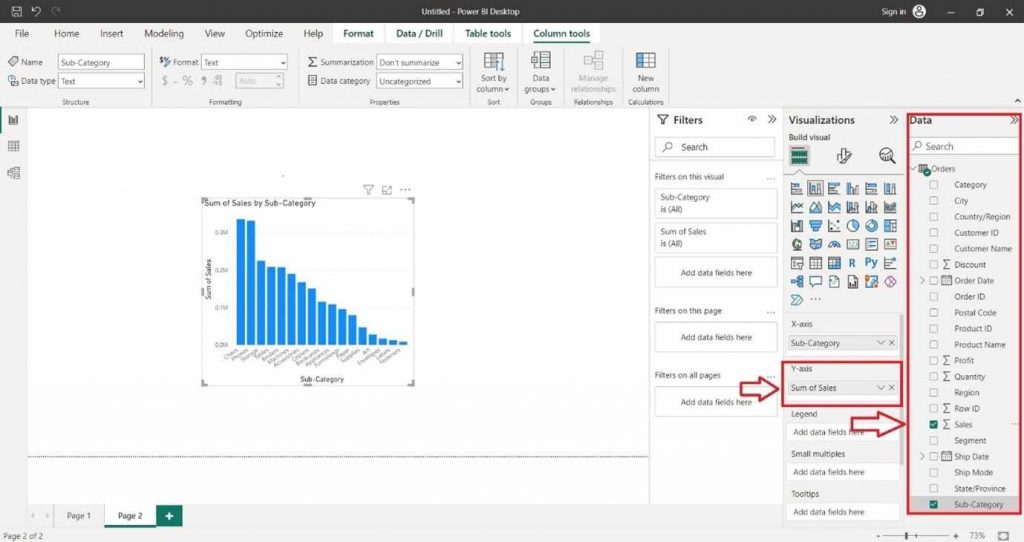
Step 3: Add a Field to the Y Axis
Drag the number you want to measure, such as sales or units sold, into the Y axis section. This decides the total height of each column.
Step 4: Add a Field to Legend
Drag the field you want to break each column into, such as product category or customer segment, into the Legend section. This is what splits one solid column into stacked segments. 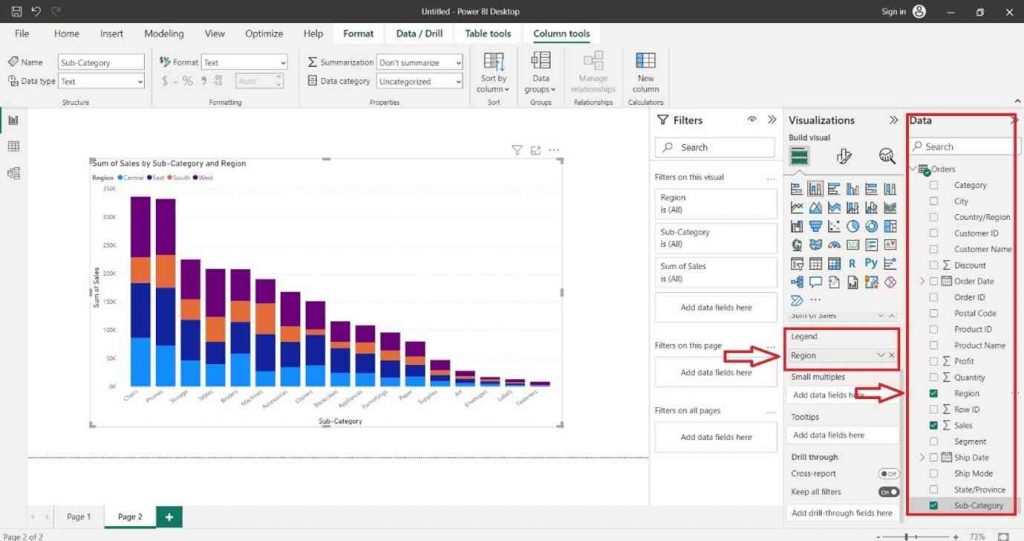
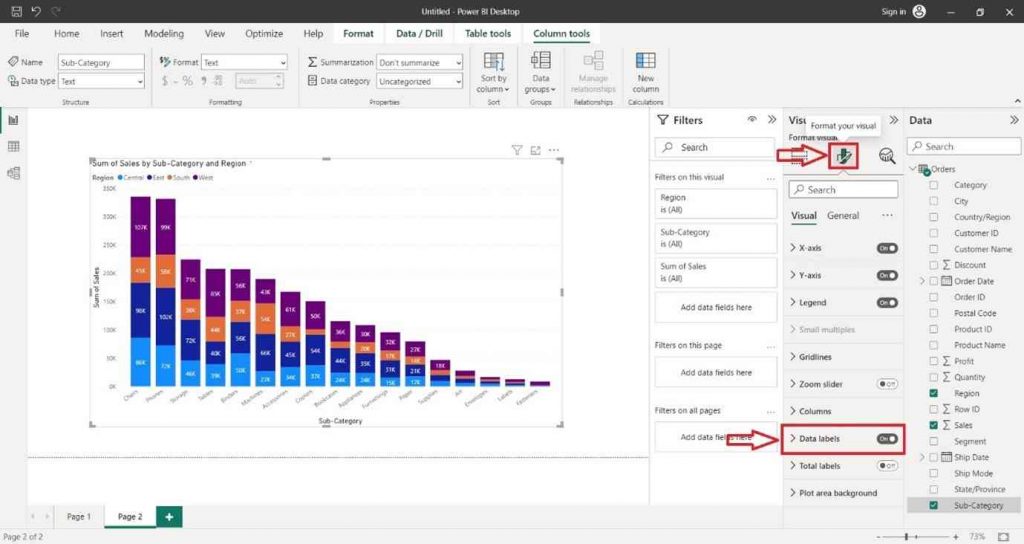
Step 5: Format the Chart and Turn On Data Labels
Click the Format icon to open the Format pane. Look for Data Labels and switch it on. This prints the value for each segment directly on the chart, so readers do not have to estimate segment sizes by eye.
Stacked Column Chart Compared to Clustered and 100% Stacked
Power BI offers two close relatives of this chart, and picking the right one depends entirely on what question you are answering.
- Clustered column chart: places each sub category as its own separate bar next to the others, instead of stacking them. Use this when comparing sub categories directly against each other matters more than seeing the combined total.
- 100% stacked column chart: stretches every bar to the same height and shows each segment as a percentage of that bar’s total instead of a raw value. Use this when you care about proportions and composition, such as market share, and do not need to compare actual totals between bars. The tradeoff is that you lose the total value entirely, a bar with 200 units and a bar with 80 units can look identical if their internal proportions match.
The plain stacked column chart sits between the two. Use it when both the total and its breakdown matter, and you are not relying on comparing one specific segment across bars.
When to Use a Stacked Column Chart?
- You want to show a total per category and how that total is made up of sub categories, in one chart.
- You are tracking how a total changes over time, such as monthly sales, while also showing what is driving that total.
- The exact comparison you need is between totals, or between the bottom segment of each bar, not between a middle or top segment across bars.
Common Mistakes to Avoid
- Too many sub categories. Past about 5 or 6 segments per bar, the chart gets hard to read and thin slices become impossible to label clearly. Group smaller sub categories into an Others segment.
- Using it when a clustered chart was the right call. If your report exists to compare sub categories against each other, a stacked column chart will actually hide that comparison, since only the bottom segment shares a baseline.
- Letting the stacking order drift. Keep the same sub category in the same position in every bar, usually largest or most important at the bottom, so readers can track it across the whole chart.
- Skipping data labels on a chart with several small segments. Without labels, small segments are nearly impossible to judge accurately from height alone.
That covers building, formatting, and choosing a stacked column chart in Power BI. To keep building out your report with other chart types, explore Prwatech’s Power BI training program, which includes placement assistance.