Creating and Deleting Budget
Creating and Deleting a Budget in Google Cloud
A Google Cloud budget is a notification tool, not a spending limit. You set a monthly dollar amount and a few percentage thresholds, and Google emails you when actual or forecasted spending crosses one of them. Nothing about creating a budget stops a virtual machine, cancels a query, or disables billing on its own. Think of it the way a phone carrier’s data usage alert works, it tells you where you stand, it does not cut off your connection.
This walks through creating a budget with sensible alert thresholds, explains what it would actually take to build a real spending cap on top of it, and covers deleting a budget you no longer need.
Step by Step Process of Creating and Deleting a Budget
Step 1: Open Billing
Open Console. Open Menu > Billing
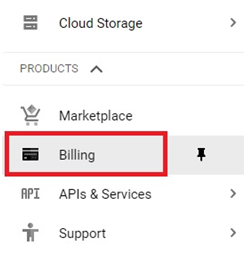
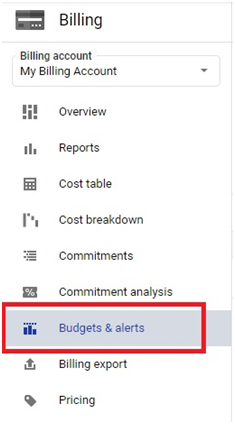
Step 2: Open Budgets and Alerts
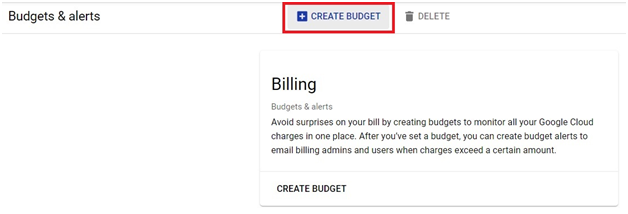
Step 3: Create a Budget
Click Create Budget.
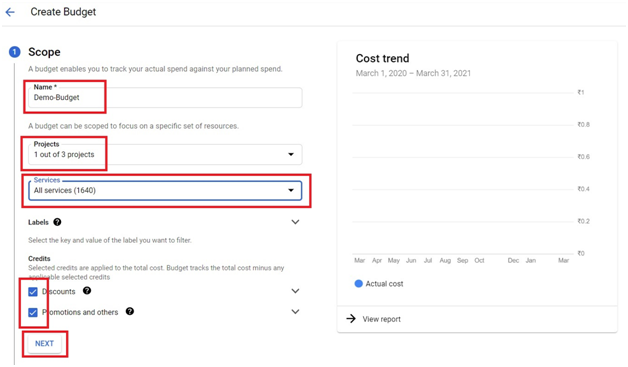
Step 4: Name It and Choose Its Scope
Give the budget a name, and choose which project or projects it applies to, you can also create one budget covering every project on the account. Choose which services to include, tick Discounts and Promotions if you want those factored into the calculation, then click Next.
Step 5: Set the Amount
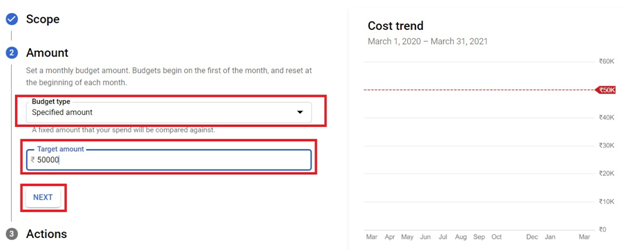
Choose Specified Amount as the budget type, enter your target amount, then click Next.
Step 6: Set Alert Thresholds
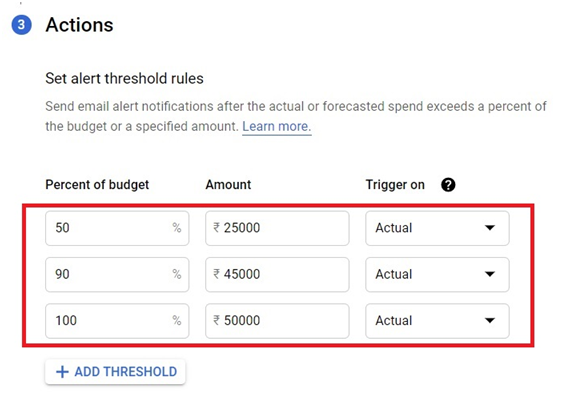
Choose the percentages of your budget that should trigger a notification. Google’s own default thresholds are 50 percent, 90 percent, and 100 percent of the amount you set, and adding a threshold above 100 percent is worth considering too, so you find out if spending genuinely runs away rather than only confirming what you already expected.
Step 7: Set Notifications and Finish
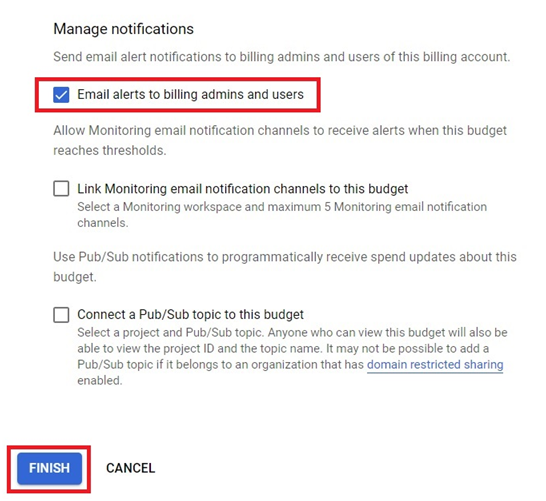
Tick email alerts to billing administrators and users, then click Finish.
The budget is created.
Budgets Are Not Spending Caps
This is worth repeating plainly. An email alert, on its own, does not stop anything from running or from billing you further. Your VMs keep running, your BigQuery jobs keep executing, and your bill keeps climbing straight past a threshold you set, until you personally take action or have already built something that takes action for you. Billing data itself can also lag by several hours, so by the time an alert actually reaches you, some of that spending has usually already happened.
Building an Actual Spending Cap
If you genuinely need spending to stop automatically once a budget is exceeded, that requires connecting your budget to a Pub/Sub topic, then deploying a Cloud Function that listens for that notification and takes action, commonly disabling billing on the project entirely, which also stops every resource in it. This is a deliberate, separate setup, not something a budget does by default, and disabling billing outright is a serious enough action that it is generally not something to automate on a production project without careful thought first.
Deleting a Budget
Open Billing, then Budgets and Alerts, and find the budget you want to remove. Select it, then choose Delete Budget, and confirm when prompted. Once deleted, that budget’s alerts stop firing immediately, so make sure nothing was actually relying on it before removing it.
Common Mistakes to Avoid
- Assuming a budget alone limits how much you can spend. It only notifies, and only a separate Pub/Sub and Cloud Function setup can actually stop spending automatically.
- Setting only a 100 percent threshold and nothing earlier. A 50 and 90 percent warning gives you time to act before you are already over budget.
- Automating a billing disable action on a production project without fully understanding the consequences. It stops every resource in that project at once.
- Deleting a budget that a team is still relying on for its alerts, without checking with them first.
That covers creating a budget with sensible alerts, what it actually does and does not do, and deleting one you no longer need. To go further, explore Prwatech’s Google Cloud training program, which includes placement assistance.