GCP BigQuery
Understanding BigQuery on Google Cloud Platform
BigQuery is Google Cloud’s serverless data warehouse, built to run SQL queries against datasets ranging from a few rows to petabytes, without you provisioning, sizing, or managing a single server. You write a query, BigQuery allocates whatever compute it needs to answer it, and you never touch the machines doing that work.
Two architectural choices make this possible. First, BigQuery separates storage from compute entirely, your data sits in Google’s distributed storage layer, and a completely separate compute layer reads it when a query runs, so each side scales independently and you are billed for them separately. Second, BigQuery stores data in a columnar format, meaning a query only has to read the specific columns it references rather than scanning whole rows, which is a large part of why it can scan enormous tables quickly and why the columns you select directly affect what you pay.
Data stored in BigQuery is also replicated across multiple availability zones, with Google stating 99.999999999 percent annual durability, eleven nines, for stored data.
What BigQuery Actually Costs
BigQuery’s default pricing model, called on demand pricing, charges by how much data a query actually processes, currently around 6.25 US dollars per tebibyte scanned, with the first tebibyte processed each month free. Storage is billed separately, with the first 10 GB free as well. This is why the columns you select in a query matter for cost, not just for speed.
For teams with steady, predictable query volume, BigQuery also offers Editions, Standard, Enterprise, and Enterprise Plus, which reserve compute capacity at an hourly rate instead of billing per query. This replaced the older flat rate slot pricing model in 2023. Most people learning BigQuery, and most light workloads, stay comfortably inside the on demand free tier and never need to think about Editions at all.
Step One: Get Started With a GCP Account
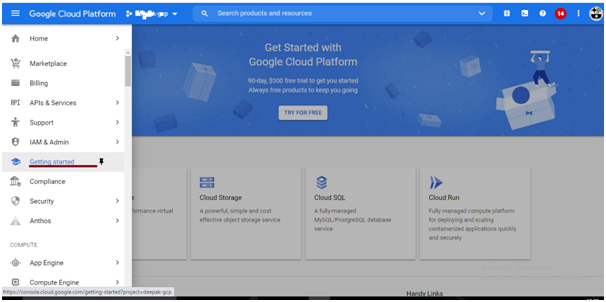
Open the Google Cloud console and select Getting Started.
Step Two: Create a Project
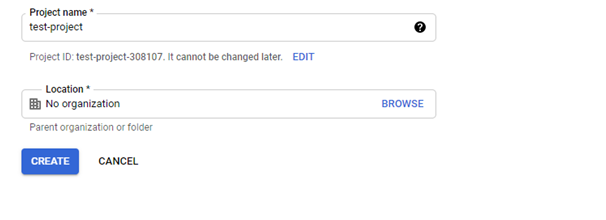
Select New Project.

Step Three: Set Up Billing
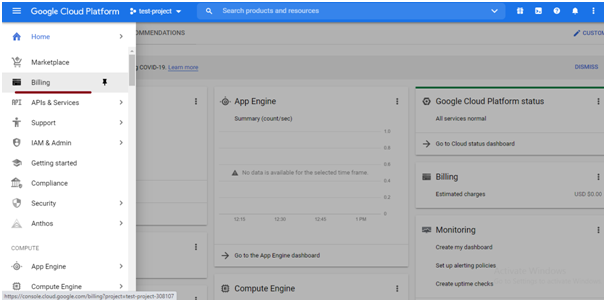
Select Billing.
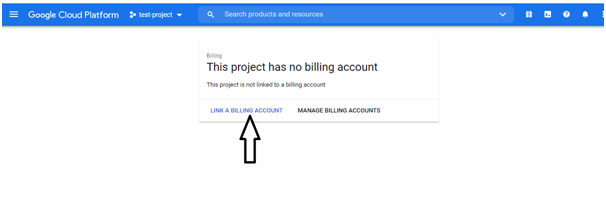
Select Link a Billing Account.
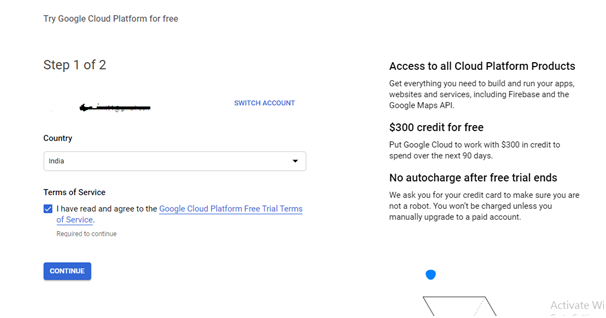
Select Create Billing Account.
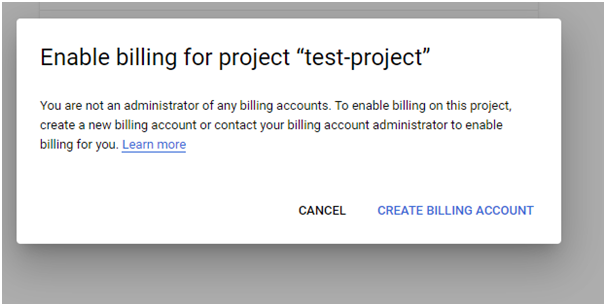
Enter your payment details. Google typically places a small, temporary authorization charge on the card to verify it, which is standard practice and not an actual fee for using BigQuery itself.
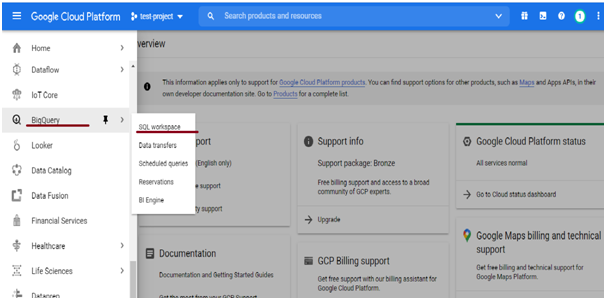
Step Four: Open BigQuery
Select BigQuery, then SQL Workspace.
Step Five: Add a Public Dataset
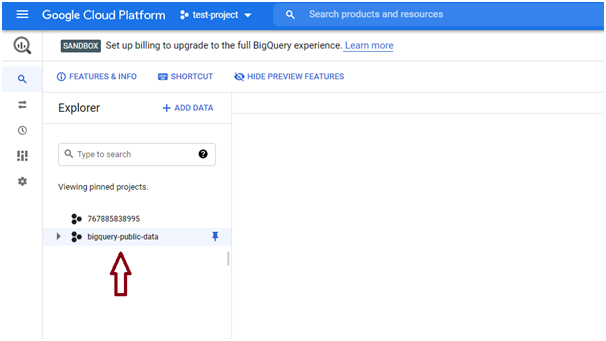
Click Add Data, then Explore Public Datasets, and pick any dataset that interests you. This adds it to your project without loading or copying anything yourself.
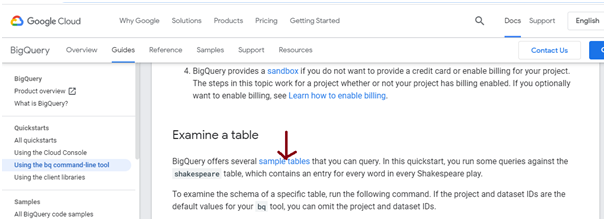
The dataset appears in your project once added.
Step Six: Explore the Dataset
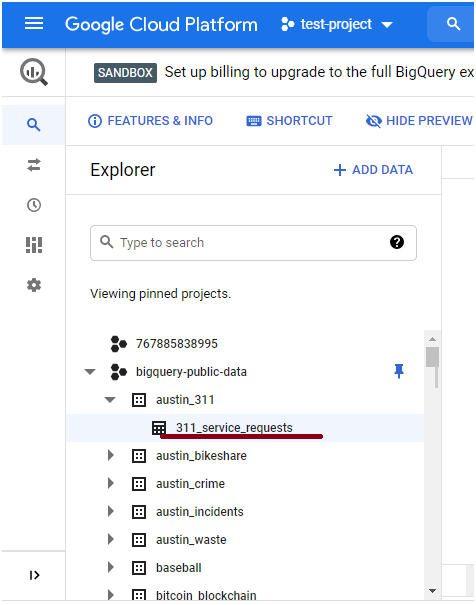
The dataset you selected is now available to explore. Any public dataset works here, pick whichever matches your own interest.
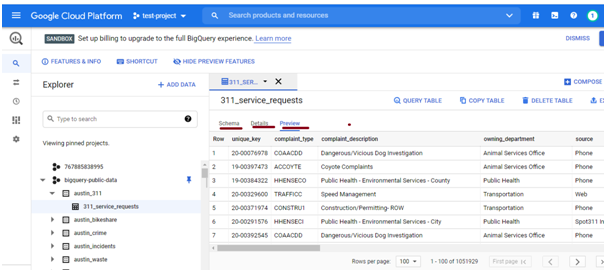
Click into it to view its schema, details, and a preview of its actual rows before you query it.
Step Seven: Write and Run a Query
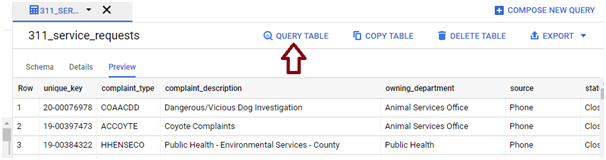
Click Query Table to open a query editor pointed at that table.
If you see a syntax error, check that your SELECT clause actually names something, a lone SELECT with nothing after it will not run. Adding an asterisk after SELECT, to return every column, is the simplest fix while you are just getting started.

Once corrected, the query validates without error.

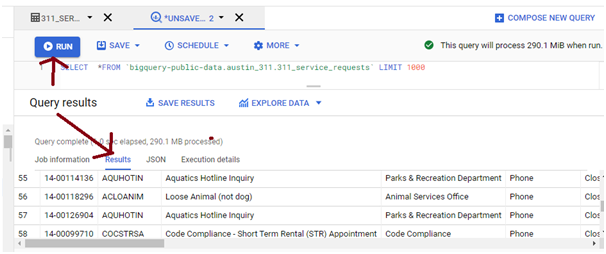
Click Run to see the result. Adjust the query however you like once you are comfortable, this is just a starting point.
Common Misconceptions to Watch For
- Assuming BigQuery needs a cluster sized to your workload. It does not, that is the entire point of its serverless design, capacity is allocated per query automatically.
- Assuming a bigger table always costs more to query. Cost follows columns read and bytes scanned, not table size alone, a narrow query against a huge table can cost less than a wide query against a small one.
- Assuming Editions replaced the free tier. They did not. On demand pricing, with its monthly free allowance, is still the default, and Editions are an optional path for predictable, heavier workloads.
Where to Go From Here
This series covers BigQuery in far more depth than a single overview page can. A few places to go next, depending on what you are trying to do:
- Loading data, from Cloud Shell, a local file, Cloud Storage, Google Drive, or a public dataset, each covered in its own dedicated guide in this series.
- Automating and connecting BigQuery, through scheduled queries, Cloud Functions, Cloud Composer with Airflow, and federated queries against Cloud SQL.
- Building on top of BigQuery, with user defined functions, BI Engine for faster dashboards, and reporting through Data Studio.
That covers what BigQuery is, how its architecture and pricing work, and your first steps inside it. To go further, explore Prwatech’s Google Cloud training program, which includes placement assistance.
